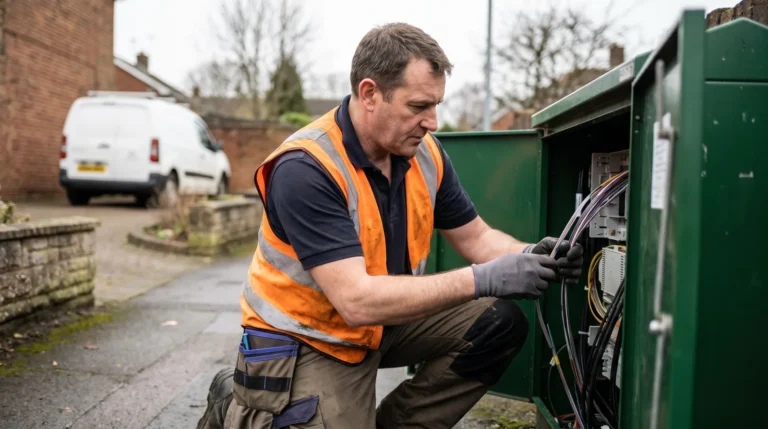
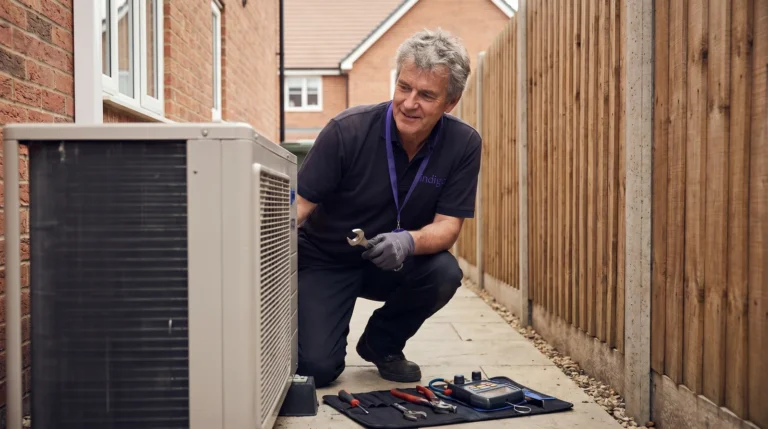
Fleet Management and Field Service: Connecting the Dots
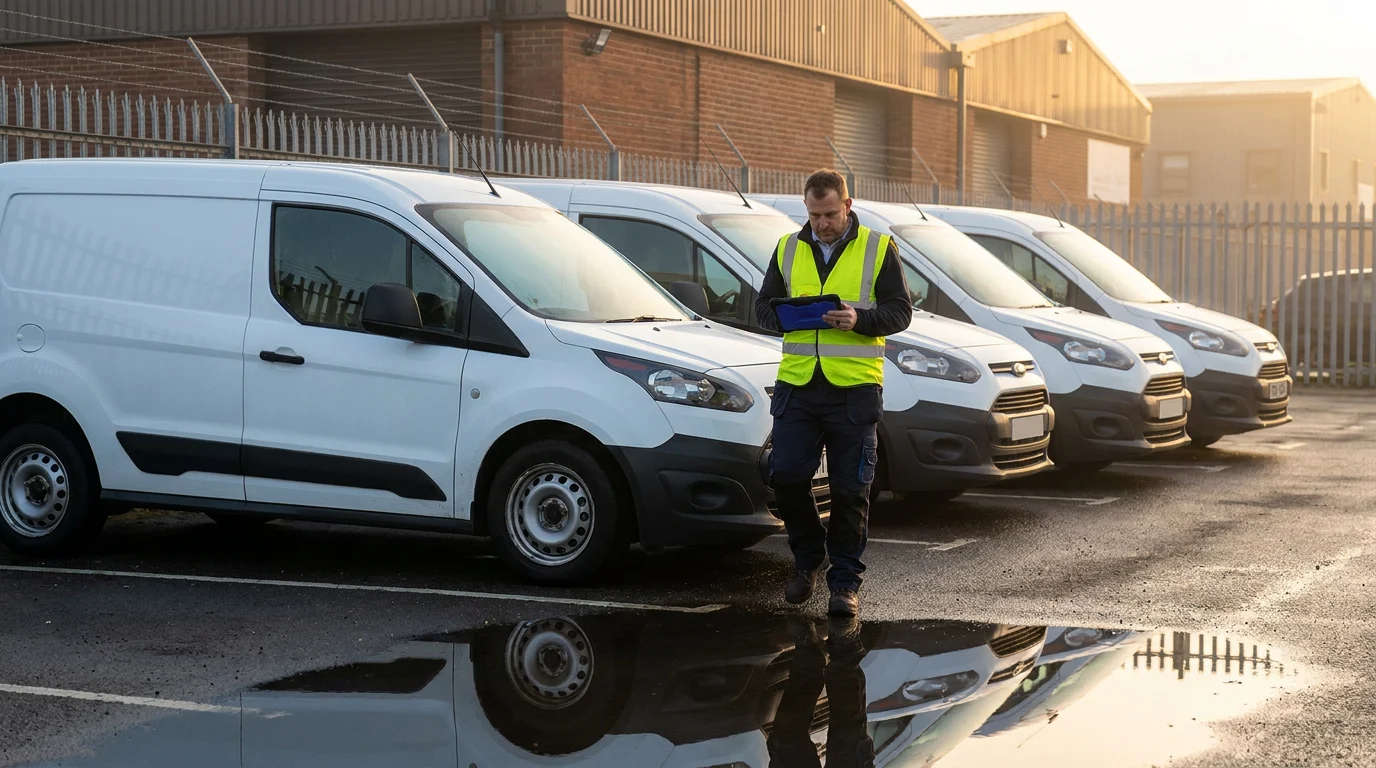
Ask a field service operation whether it tracks its technicians and the answer is usually yes, the vans have trackers. That is the industry’s most durable mix-up. Fleet tracking and field-service tracking share a GPS signal and almost nothing else: one watches a vehicle for the operation, the other manages an appointment for a customer, and confusing them costs money and goodwill.
Quick answer: Fleet management keeps the vehicles behind a field service operation legal, safe and available: telematics, maintenance and compliance. It is a separate discipline from scheduling the people those vehicles carry, and separate again from what customers see. Connect all three deliberately; HSE estimates up to a third of UK road incidents involve someone driving for work.
Key takeaways
- Fleet management runs the vehicle: telematics, vehicle tracking, maintenance scheduling and fleet compliance, from O-licence undertakings to MOT records.
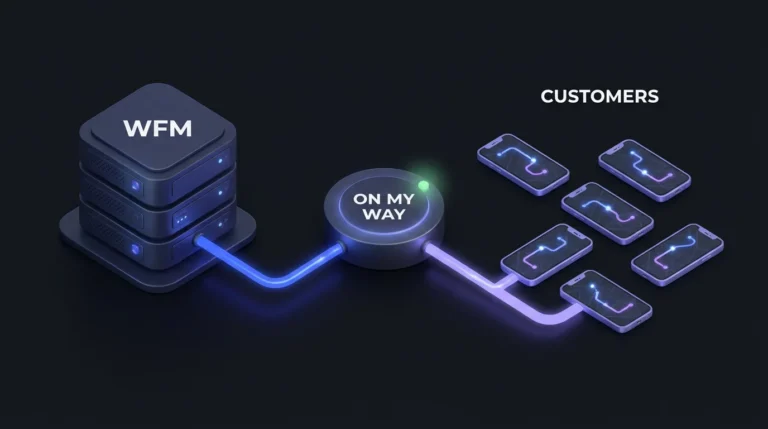
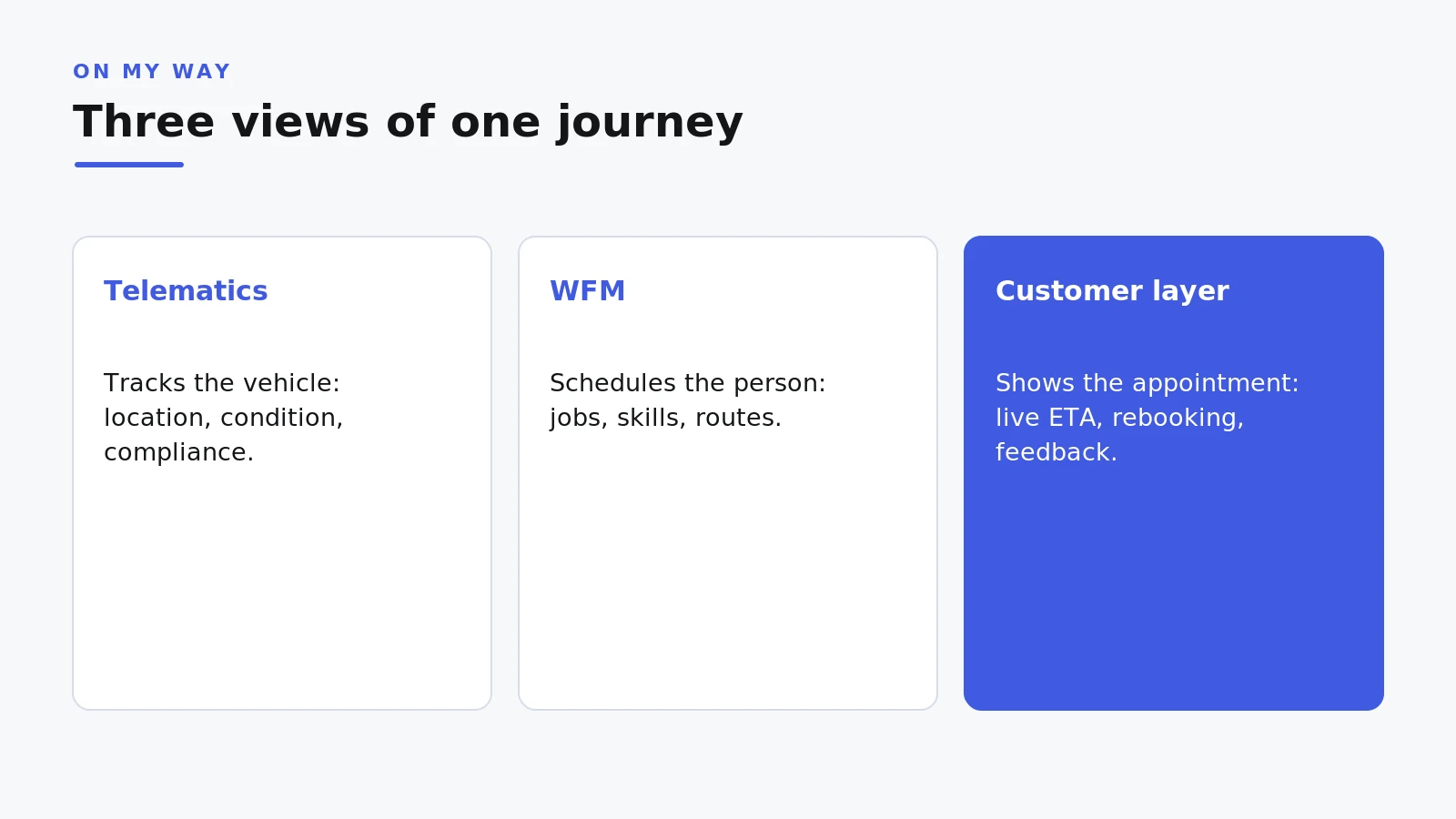
- Three systems watch one journey: the telematics platform tracks the vehicle, the WFM schedules the person, the customer layer shows the appointment.
- Never send customers a raw vehicle-tracking view; a white-label appointment view with ETA, window and rebooking answers what they actually asked.
- On My Way does not do fleet management, telematics or vehicle tracking; it is the customer layer that sits alongside both.
What fleet management covers in a field service operation
Fleet management is everything that keeps the vehicles legal, safe and economical: acquisition, servicing and inspection, tracking and driver behaviour, fuel, insurance and claims. Run 300 vans and it is a discipline in its own right, with its own software market.
Telematics is the data spine: a hard-wired unit in each van reporting position, ignition, speed, harsh braking and mileage. That feed drives vehicle tracking for the operation, driver scoring for insurance, service triggers for the workshop, and the evidence file when a claim lands. Maintenance scheduling turns triggers into booked services, defect fixes, tyres and MOT slots. Availability is the point: the measure of a fleet team is how rarely a van is off the road.
A fleet management system, or fleet management software in its lighter forms, pulls those strands together, and note who buys it: fleet or facilities teams, rarely service operations. MarketsandMarkets values field service management software at USD 5.10 billion in 2025, heading for USD 9.17 billion by 2030; fleet software is a separate market, bought through a different door. The service side of the stack is mapped in our guide to field service management.
The UK fleet compliance load, from O-licences to duty of care
Compliance is the part of fleet management with personal accountability attached, and it lands on the field service fleet whoever runs it. Operate goods vehicles over 3.5 tonnes and you need an operator’s licence, with signed undertakings that vehicles stay fit and serviceable, drivers report defects and records prove both. DVSA enforces; a traffic commissioner can revoke a licence, removing vehicles and appointments at a stroke.
Most service fleets sit below 3.5 tonnes and escape operator licensing, but not the roadworthiness expectations behind it: daily walkaround checks, planned safety inspections, prompt defect fixes and maintenance records kept for 15 months, plus an MOT from each van’s third birthday. Driver checks run alongside: licence validity, eyesight, fatigue.
Health and safety law reaches further. Driving for work is a workplace activity, and HSE estimates up to a third of road traffic incidents involve somebody at work at the time, which may account for more than 20 deaths and 220 serious injuries every week. A field service operation is, by headcount, a company on the road; fleet compliance is where that fact gets managed.
Where fleet meets field service: the van is the job
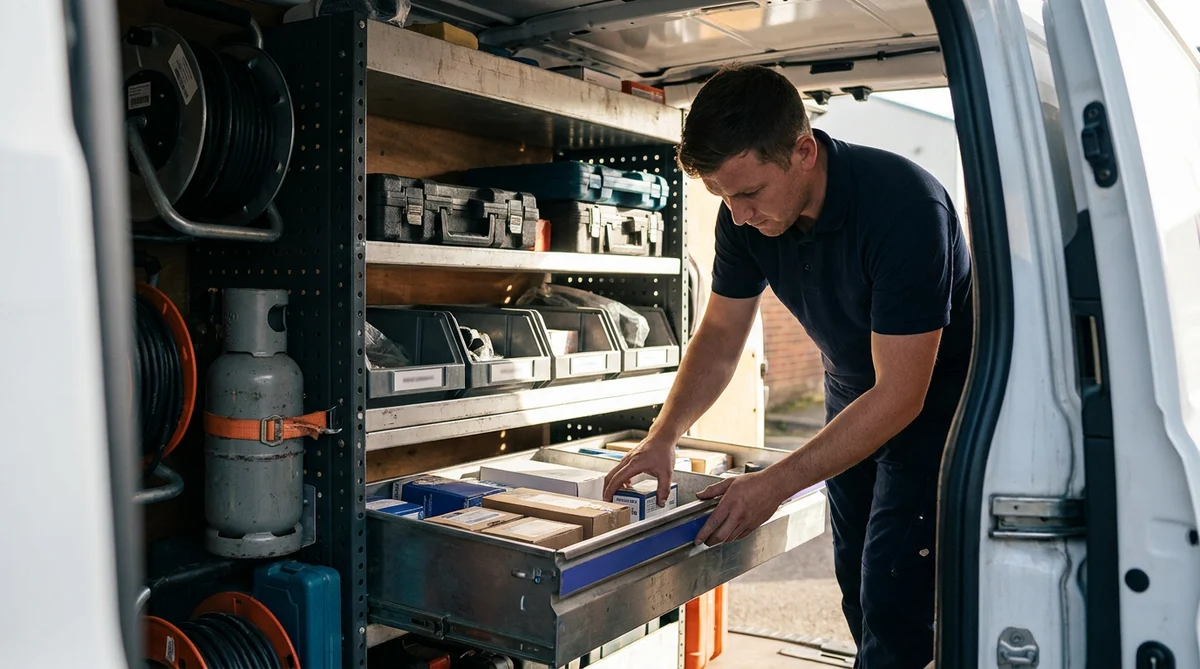
The two disciplines meet in the van, which a service operation relies on as three things: a mobile warehouse, the source of the ETA, and a unit of appointment capacity.
As a warehouse, the van decides outcomes before anyone rings a doorbell: parts on board determine whether the first visit finishes the work. Aquant’s 2024 benchmark puts average first-time fix at 76%, and a failed first visit stretches the job to 2.7 visits and adds 13 days. Van stock behaves like a service KPI; we treat it as part of first-time fix rate, not a stores problem.
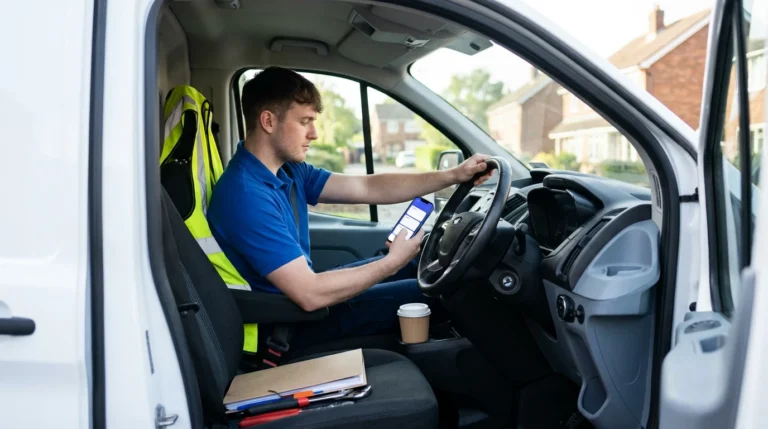
As the source of the ETA, the van’s position is where every arrival promise starts, read from the technician’s phone or a telematics feed. As capacity, the arithmetic is blunt: every avoidable VOR (vehicle off road) day is a full diary paid for and never sold. Schedules only hold when the engine knows which vehicles exist tomorrow; the constraint side sits in our guide to job scheduling software.
Capacity leaks the other way too: repeat visits burn van-days as surely as breakdowns. E.ON recorded 19% higher appointment-based first-time job completion, with engineers arriving already briefed on what the customer had reported. That is van capacity recovered without buying a van.
Three systems, three views of one journey
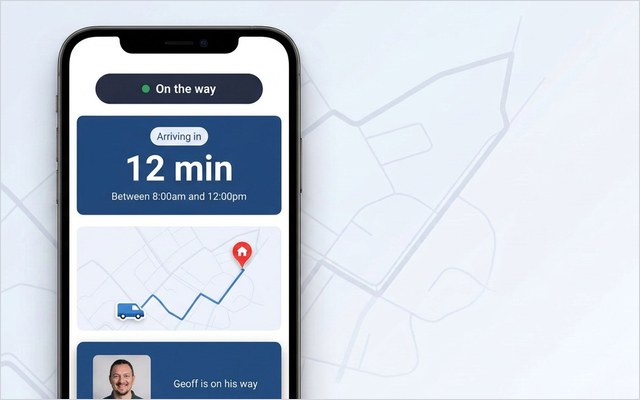
One doorstep visit has three audiences. The telematics platform tracks the vehicle for the fleet team: position, condition, compliance evidence. The WFM schedules the person: jobs, skills, hours, route. The customer layer shows the household one appointment: the window, the ETA, the ability to change it.
Substitution fails in predictable ways. A telematics map cannot tell a dispatcher which job an engineer is on, only which street the van is in. A WFM holds no MOT dates or defect reports, so left alone it schedules vans that cannot start. Neither was designed to talk to a customer.
To declare an interest plainly: On My Way is the third view and only the third view. It does not do fleet management, telematics or vehicle tracking, and it never sees a maintenance record. It reads the schedule and location your WFM already holds and turns them into an appointment-framed, white-label page. The volume justifies the seat: across On My Way’s enterprise deployments, a substantial share of appointments change between booking and the visit; each change is a customer conversation waiting to happen.
Already running a WFM and a telematics platform? See how On My Way works as the customer layer on top of both, typically live in 4–6 weeks, nothing for customers to install.
Why customers should never see the fleet-tracking view
Because it answers the wrong question. The fleet view tells an operation where its assets are; the customer wants to know whether their afternoon is safe. Pointing a household at a vehicle-tracking screen fails on three counts.
Privacy first. A live vehicle feed exposes a driver’s whole day: every stop, every other customer’s street, every break. That is personal data under GDPR and a works-council question in some markets; drivers accept operational monitoring, not public broadcast.
Noise and framing finish the case. Registration plates and idle alerts mean nothing to someone waiting for a boiler engineer, and a moving dot has no context: the van heading away may be fetching a part for this job, but the customer reads abandonment and phones in.
The alternative is the same signal in the right frame: live technician tracking that switches on once the engineer is genuinely en route, an honest arrival window, and a self-service path to rebook if the time fails. It arrives as a browser link by SMS or email, nothing to install, under your brand rather than ours.
The EV transition changes the fleet plan, not the promise
Electrification is a fleet management problem first. The UK’s zero emission vehicle mandate sets the trajectory: 80% of new cars and 70% of new vans zero emission by 2030, and 100% by 2035. Vans are the hard half: payload, range and depot-versus-home charging decide whether an electric fleet can carry a field service day.
The operational effects land in the schedule: charging dwell becomes a planning constraint, territory density matters more, and a van due at a charger by 16:00 is one more reason an ETA moves late in the day. The routing side is covered in our guide to route optimisation.
The customer promise should not change: a window, an ETA, a way to act when either moves. One demand-side helper: On My Way’s green slots flag routing-friendly appointment times at booking and rebooking; every mile customers volunteer away is fuel saved on a diesel fleet and range preserved on an electric one.
Connecting fleet, WFM and customer layers in practice
Integration here means a handful of deliberate data flows, not a consolidation project; the work is in the joins.
- Pick one location truth for ETAs. The technician’s app or the telematics feed can drive the WFM’s live position. Choose one; two sources produce two ETAs and an argument.
- Sync vehicle availability into bookable capacity. Workshop bookings and VOR status should trim tomorrow’s slots before customers book them, not surface as a morning surprise.
- Book maintenance like a job. Services, inspections and MOTs belong in the schedule on low-demand days, so compliance stops competing with customers.
- Keep fleet data out of the customer path. The appointment view needs a schedule and a location; registrations, defect notes and driver scores stay inside the fence.
- Treat location as personal data. The customer layer should run single sign-on (Microsoft Entra ID), role-based access control and encryption, with GDPR governing what staff and customers see.
None of this replaces a telematics contract or re-platforms a WFM; each layer keeps its job, and a customer layer added this way typically goes live in 4–6 weeks.
For a UK-focused shortlist of platforms and what to require from them, see the field service management software UK guide.
Related reading: field service management software: the definitive guide, IFS Cloud and field service and service management software and its three different markets.
Frequently asked questions
Does On My Way do fleet management?
No. On My Way has no telematics hardware, no vehicle tracking, no maintenance or compliance module. It is the customer layer on top of your WFM: appointment-framed live tracking, SMS and email updates, self-service rebooking and real-time NPS capture, all white-label. Fleet management needs a fleet platform; On My Way connects alongside one, not instead of one.
What is the difference between fleet management and field service management?
Fleet management runs the vehicles: vehicle tracking, telematics, maintenance, fleet compliance, fuel and claims. Field service management runs the work: demand, scheduling, dispatch and the customer relationship around each visit. They overlap at one point, the van, and otherwise have different buyers, regulators and software markets.
Do we need a fleet management system if our WFM already tracks technicians?
At fleet scale, yes. A WFM tracks people against jobs; it holds no defect reports, service schedules, MOT dates or claims evidence, and DVSA expectations such as 15-month maintenance records assume a vehicle system of record. A dozen vans can live on spreadsheets and a walkaround app; hundreds cannot.
Can telematics data improve customer ETAs?
Indirectly, yes. A telematics feed can give the WFM a steadier live position than a phone in a pocket, sharpening arrival estimates. The customer should still meet that data as an appointment: an ETA and a window on a white-label page, never a raw vehicle-tracking map.
Is it a problem to show customers the live van location?
Raw, yes: it exposes the driver’s day and other customers’ locations, a GDPR and consent problem and a noisy experience. Appointment-framed, no: tracking that activates for the customer’s own visit, with an ETA and an honest window, delivers reassurance without exposure.
The bottom line
Fleet management and field service run on the same vans and answer to different masters: one keeps vehicles legal and available, the other turns that availability into completed appointments, and the customer layer makes both something a household can trust. Join the three deliberately and the dots connect at the doorstep.
See how On My Way works alongside the WFM and fleet stack you already run, or book a demo: a 30-minute working session, no slide deck.
References
- MarketsandMarkets — Field Service Management Market, Global Forecast to 2030 (2025)
- Aquant — Field Service Benchmark Report (2024)
- DVSA / gov.uk — Operator licensing, roadworthiness and maintenance guidance (2025)
- HSE — Driving and riding safely for work (2025)
- Department for Transport — Zero emission vehicle mandate becomes law (2024)
- On My Way / Leadent Digital — enterprise deployment data (appointment-change volume; client outcomes).

Keep your WFM. Upgrade what your customers experience.
On My Way is the customer-experience layer for field service: live arrival tracking, self-service rebooking, notes and photos, and feedback, added on top of the scheduling system you already run. No rip-and-replace, live in four to six weeks.