Net Promoter Score Software for Field Service: What to Require Before You Buy

The engineer closes the job in the last hour of a Tuesday afternoon. The boiler runs, the paperwork is filed, the van pulls away. Three days later a survey lands from a no-reply address and sits unopened between a supermarket offer and a parcel notification. By Friday it is gone, and with it everything the operation might have learned from visit number 40,213 of the year.
Quick answer: Net promoter score software for field service should capture transactional NPS in the minutes after the visit, triggered by the appointment itself, on the channel the customer already used to track the engineer. Add closed-loop alerts, segmentation by job type and engineer, and WFM integration. Engagement is the precondition: Bosch UK saw 79% higher customer engagement with appointment comms.
Key takeaways
- Field service runs on transactional NPS: score the visit in the minutes after it ends, not the brand once a quarter.
- The trigger matters more than the questionnaire; NPS software should fire from job completion in your WFM, not a marketing list.
- Response follows context. A one-tap ask on the tracking channel the customer already has open beats a cold email days later.
- Closing the loop is the point: an alert that reaches the right person while recovery is possible pays for the tool.
- Read NPS beside first-time fix rate and no-show data; a score without operational context says very little.
Why field service lives on transactional NPS
Because the thing being measured is a visit, not a brand. Relationship NPS asks a periodic, company-level question about likelihood to recommend, usually quarterly or annually, and belongs in the board pack. Transactional NPS scores one specific event, close to the moment it happened. In field service that event is the appointment: the slot that held or slipped, the engineer who arrived when the tracker said they would, the job completed on the first visit or not.
The metric has clear provenance. Fred Reichheld and Bain & Company introduced net promoter score in 2003, and Bain still maintains the Net Promoter System around it: promoters minus detractors, on a scale from minus 100 to plus 100. That is the whole definition. For how NPS compares with CSAT and customer effort score, our guide to customer satisfaction metrics for field service covers the ground; this article is about choosing the software.
In Salesforce’s State of the Connected Customer research, 88% of customers say good customer service makes them more likely to purchase again. The appointment is where that judgement forms, and transactional NPS is the instrument that catches it while it is fresh.
What net promoter score software must do for a field service operation
Five requirements separate net promoter score software built for service operations from a generic survey platform. The distinction matters more each year: MarketsandMarkets projects the field service management market to grow from USD 5.10 billion in 2025 to USD 9.17 billion by 2030, and nearly every platform in it now ships a survey module. Ask every vendor to demonstrate all five on your own appointment flow.
1. Capture in the minutes after the visit
Real-time NPS means the ask arrives while the van is still in the postcode. Memory of a service visit decays within days, and what replaces it is a general impression of the brand, which drags the measurement back towards relationship NPS whether you intended that or not. Insist on trigger-to-message times measured in minutes, not sending windows measured in days.
2. Trigger from the appointment flow, not a contact list
The completion event in your WFM should fire the invitation automatically, whether that system is Oracle Field Service, Salesforce Field Service, Microsoft Dynamics 365, IFS, SAP or ServiceMax. No CSV exports, no weekly batch. Every completed job produces exactly one ask, with rules for multi-visit work orders so nobody is surveyed twice about a single repair. NPS survey software that cannot see your schedule is guessing.
3. Close the loop while the visit is still recoverable
A detractor score should raise an alert within minutes, routed to the contact centre or regional manager with the work order attached: which engineer, which job type, what the tracking thread showed. A recovery call the same afternoon changes outcomes; a monthly report of averages changes nothing. Closing the loop is where an NPS tool earns its licence fee.
4. Segment by job type, region and engineer
A single national score can hide a strong installation business and a struggling repairs book inside one comfortable number. Service-grade NPS software slices by job type, region, engineer or crew, and by whether the appointment was rebooked before the visit. That last cut is often the sharpest, because scores tend to sag exactly where the schedule slipped.
5. Attach every response to the work order
A standalone survey blaster creates a second system: separate contact data, separate opt-outs, separate reporting, and scores that never meet the jobs they describe. When every response attaches to the work order, operations, CX and the contact centre read the same page, and a score can be traced to a slot, a route and a decision.

Ask on the channel the customer is already using
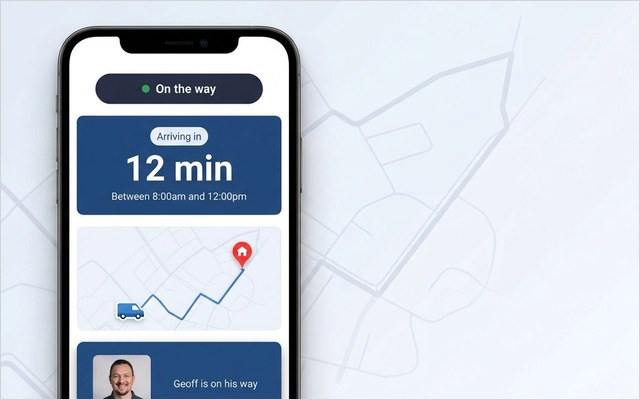
The strongest response comes from asking at the moment of the experience, on the channel the customer already has open. A well-run appointment journey sends a booking confirmation, a reminder, an on-the-way message with live tracking and an ETA, then a completion note, all over SMS and email, opening in the browser with nothing to install. By the time the engineer leaves, that thread is the natural place for a score, one tap away.
Treat feedback as a feature of the appointment layer, not a separate campaign run by a separate team. This is the design behind On My Way’s customer feedback capability: the NPS or CSAT question sits at the end of the tracking journey, white-labelled throughout, with no login or reference number to remember.
Engagement is the precondition for all of it. Bosch UK saw 79% higher customer engagement with appointment comms, and a feedback programme inherits exactly that engagement. A survey sent into a channel nobody opens has failed before the first question, however carefully it was written.
See it against your own appointment flow. Book a demo and we will walk your booking-to-completion journey and show where the feedback ask would sit. A 30-minute working session, no slide deck.
Be honest about response rates and survey fatigue
Published response-rate benchmarks deserve suspicion, because most omit the denominator. The same programme can report a figure three times higher by counting opened messages instead of completed jobs. Rather than trusting a brochure, ask each vendor for per-channel response rates from deployments comparable to yours in volume, industry and channel mix, with the calculation shown. A vendor who cannot produce that is telling you something useful.
Fatigue is the quieter killer. Keep the transactional ask to one score and an optional comment. Cap frequency per household, so a customer with three jobs in a month is not surveyed three times. Chase non-responders once at most, and if you run relationship NPS as well, sample it quarterly rather than blanketing the base. Question wording and length are a discipline of their own; our guide to customer satisfaction surveys for field service covers both.
Read NPS alongside the operational numbers
A falling NPS is usually an operations report arriving late. Scores move with missed slots, no-shows, second visits and silence between booking and arrival, so read them next to first-time fix rate, no-show rate and inbound call volume, with an appointment-changed flag on every response. Deployment data from On My Way’s enterprise clients shows the same pattern: a substantial share of appointments change at least once between booking and the day of the visit, and every change is a moment where the score is decided.
Brinks Home makes the connection concrete: 34% fewer ETA calls and 25% higher appointment-based first-time job completion after deploying the appointment layer. Neither is an NPS statistic, deliberately. They are the operational movements that sit underneath one, because anxious calls and repeat visits are precisely what detractor comments describe.
No score stands alone. NPS is one instrument on a dashboard that also carries utilisation, travel time and complaint volume, and our pillar guide to field service customer experience sets out how the pieces fit together.

Run the selection against your appointment journey, not a feature grid
Shortlists built from feature grids reward whoever writes the best grid. A sharper process takes a week and uses your own operation as the test rig:
- Map the journey from booking to completion and mark every message customers currently receive; gaps are where surveys go to die.
- Require a demonstration triggered by a live completion event in your WFM or a sandbox of it. A demo driven from a spreadsheet upload is a preview of your operating model.
- Submit a detractor score yourself and time how long it takes to reach a named person with the work order attached.
- Check segmentation against your own job-type taxonomy, not the vendor’s sample data.
- Pilot with an exit gate: agreed response-rate and loop-closure criteria before the full fleet commits.
Enterprise practicalities belong on the same list. On My Way runs on top of the WFM you already have, typically goes live in 4–6 weeks with a 6-week pilot option, and answers the questions IT will ask: single sign-on through Microsoft Entra ID, role-based access control, encryption, data residency and GDPR alignment. The customer side is browser-based with nothing to install, and Contact Centre View, a Premium option, gives agents the appointment and feedback picture without consuming WFM licences. Pricing is per technician or by appointment volume; request a quote for your fleet size.
One commercial note. Leadent guarantees 35% fewer appointment-related calls within 90 days of go-live, or the team keeps working at no charge until the number is met, and typical results run 40–55%. That guarantee measures call volume, not scores; the same appointment layer that carries the calls away carries the feedback back.
Frequently asked questions
What is the best NPS software for field service?
The one wired into your appointment flow. Judge candidates on five tests: capture within minutes of the visit, triggers from WFM job completion, closed-loop detractor alerts, segmentation by job type and engineer, and responses attached to work orders. A generic survey platform can send questions; it cannot see your schedule.
What is the difference between transactional NPS and relationship NPS?
Transactional NPS scores a single event, such as a completed appointment, moments after it happens. Relationship NPS scores the overall relationship on a periodic cycle, typically quarterly or annually. Field service runs on the transactional form day to day, with at most a sampled relationship wave for trend context.
What response rate should we expect from NPS surveys?
It depends on channel, timing and brand trust, and most published benchmarks omit their denominator. Ask vendors for per-channel response rates from deployments comparable to yours, with the calculation shown. Asking within minutes, on the tracking channel, with a one-tap first question does more for response than any incentive.
Does NPS software need to integrate with our WFM system?
Yes, in two directions: the completion event should trigger the ask, and the response should attach to the work order. On My Way layers over Oracle Field Service, Salesforce Field Service, Microsoft Dynamics 365, IFS, SAP and ServiceMax without changing how scheduling runs.
Do customers need to download an app to leave a score?
No. The request arrives by SMS or email and opens in the browser, on the same page the customer used to track the engineer. An app-install barrier at that point in the journey would show up immediately as lost responses, so the customer side of On My Way never requires one.
How long does deployment take?
Typical go-live is 4–6 weeks on top of an existing WFM. A 6-week pilot on one region or job type is the usual route in: agree exit criteria up front, measure response rates and loop closure, then scale with evidence rather than hope.
The bottom line
Choose net promoter score software the way you would choose any operational system: by where it sits in the flow of work. If the ask lands at the appointment moment, on a channel the customer already trusts, responses arrive. If each score reaches someone who can act the same day, they compound. Feedback works as a feature of the appointment layer, not as a campaign running beside it.
On My Way adds real-time NPS capture to the journey your customers already follow, on top of the WFM you already run. Book a demo and request a quote for your fleet size, or start with how it works. Thirty minutes on your own appointment flow, no slide deck.
References
- Bain & Company — Net Promoter System and the origin of NPS (2003)
- Salesforce — Customer Service Statistics, State of the Connected Customer (2024)
- MarketsandMarkets — Field Service Management Market Forecast to 2030 (2025)
- On My Way / Leadent Digital — enterprise deployment data (appointment-change volume; client outcomes).

Keep your WFM. Upgrade what your customers experience.
On My Way is the customer-experience layer for field service: live arrival tracking, self-service rebooking, notes and photos, and feedback — added on top of the scheduling system you already run. No rip-and-replace, live in 4–6 weeks.