Field Service Customer Experience: A Complete Guide

Quick answer: Field service customer experience is everything a customer feels across a service appointment — from the moment they book to the moment the engineer leaves. It’s the field-service application of customer experience management (CEM): the discipline of designing, measuring and improving every interaction. And in field service, almost all of those interactions converge on a single moment — the appointment. Get the booking, the wait and the visit right and you earn loyalty; get them wrong and no amount of marketing recovers it. The field-service organisations that win treat the appointment as their primary CX channel, not an operational afterthought.
Key takeaways
- In field service, the appointment is the brand experience — the engineer at the door is often the only human a customer ever meets.
- The biggest, cheapest CX win is closing the “where’s my engineer?” gap with proactive communication and self-service.
- Customers now expect the same self-service they get from retail: 90% expect an online self-service option, and most prefer it to calling.
- CX in field service is measurable — NPS, CSAT and CES on the experience side; first-time fix, no-show rate and call deflection on the operational side.
- You don’t need to replace your workforce-management system to fix the experience; you add a customer-facing layer on top of it.
The field-service market is growing fast, worth around USD 5.1 billion in 2025 and forecast to reach USD 9.17 billion by 2030 (MarketsandMarkets). Yet most of that investment goes into scheduling engines, routing and mobile apps for technicians. The customer, the person waiting at home for a four-hour window, is often the last to benefit.
That gap is the opportunity. A field-service operation can run a flawless schedule and still deliver a poor experience, because the customer never sees the schedule. They see whether anyone told them the engineer was running late. Field service customer experience is the discipline of closing that distance between operational excellence and what the customer actually feels. It’s where the broad practice of customer experience management meets the specific realities of sending a person to someone’s home.
What is customer experience management?
Customer experience management is the discipline of orchestrating every touchpoint across the customer journey so the sum of those interactions builds trust, satisfaction and loyalty. It spans marketing, sales, service and support, and treats experience as something you design and measure rather than something that simply happens.
CEM grew up in retail, banking and telecoms, where the touchpoints are mostly digital: a website, an app, a call centre, an email. Field service is different in one decisive way. The defining interaction happens in the customer’s home or premises, delivered by a person the customer didn’t choose and may never see again. That makes the stakes higher and the variables harder to control, which is exactly why a deliberate approach matters more here, not less.
Why customer experience management matters in field service
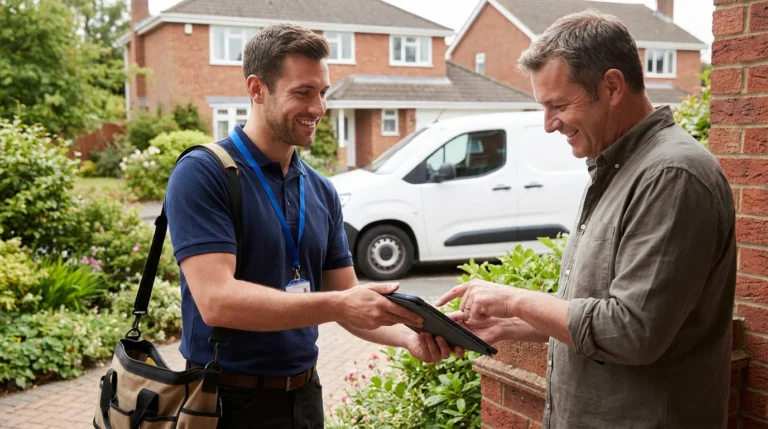
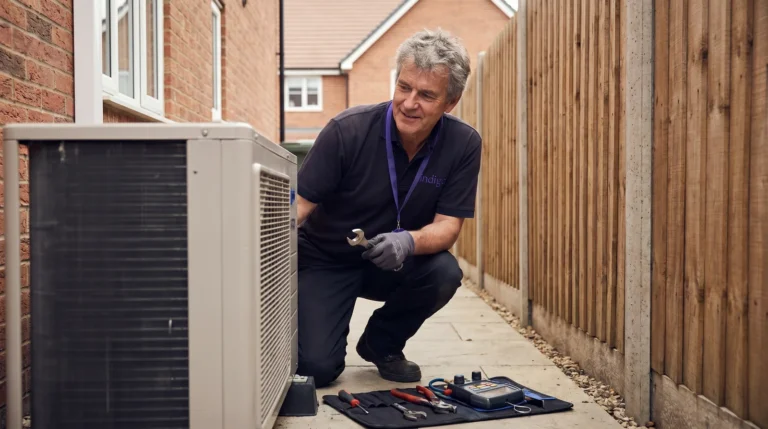
Because in field service, the appointment is the brand. A customer’s lasting impression of an energy supplier, a manufacturer or a security firm is rarely formed by an advert. It’s formed by whether the engineer arrived when promised, communicated clearly and fixed the problem first time.
The expectation bar has moved, and it moved in retail. Research highlighted by NetSuite found that 74% of mobile-service workers say customer expectations are higher than they used to be, and 73% say customers now expect a more personal touch. People who can track a £4 parcel to their door in real time do not understand why they can’t track the engineer attending a £400 repair. The benchmark for your field-service experience isn’t your competitor down the road; it’s the last great digital customer experience your customer had with anyone.
There’s a hard commercial edge to this too. Poor experiences drive avoidable cost: inbound “where are you?” calls, missed appointments, repeat visits and churn. Each of those is both a CX failure and an operational one, which is the good news, because a single intervention can improve both numbers at once.

The “where’s my engineer?” problem
The single biggest source of friction in field service is uncertainty about the appointment. It is also the easiest to fix, and fixing it pays back on both the experience and the cost line at once.
Consider what actually happens around a booked visit. In a typical enterprise operation, a third to two-fifths of booked appointments get changed by the customer and another tenth or so are cancelled outright. Each of those changes tends to generate a five-to-seven-minute call to a contact centre, frequently outside business hours (On My Way deployment research). Add the customers who simply call to ask when the engineer will arrive, and a large share of contact-centre volume turns out to be questions a customer could have answered themselves, if only they’d been given visibility.
This is the “where’s my engineer?” problem, and it compounds. The direct cost is the call itself. The indirect cost is what the call signals: an anxious customer, a lower satisfaction score, and an experience bookended by uncertainty even when the actual repair goes perfectly. Proactive communication (appointment confirmations, reminders, a live ETA, a “your engineer is 20 minutes away” notification) removes the anxiety and the call together. It is the single highest-return move in field-service CX.
The field-service customer journey, stage by stage
Good CEM maps the whole journey and asks, at each stage, “what does the customer need to feel in control?” In field service the journey is remarkably consistent across sectors:
- Booking — choosing a slot that suits them, not just the operation.
- Confirmation — clear, immediate, with the details and a way to change it.
- Reminder — ahead of the day, reducing no-shows.
- Live tracking — visibility of the engineer’s ETA on the day.
- Arrival — on time, within the promised window, with the right information.
- Service — the visit itself, ideally fixed first time.
- Feedback — a quick, real-time way to say how it went.
Each stage is a CX touchpoint and an operational lever. A self-service booking that lets the customer pick the slot reduces failed visits. A reminder reduces no-shows. Live tracking deflects the ETA call. Real-time feedback surfaces problems while they’re still fixable. Mapping the journey this way, which we explore stage by stage in our guide to the field-service customer journey, turns a vague ambition to “improve CX” into a list of specific, measurable interventions.
Self-service as a customer-experience strategy
The most effective field-service CX strategy gives customers control: let them book, reschedule, track and confirm without phoning anyone. This isn’t a cost-cutting compromise; it’s what customers actively prefer.

The evidence is consistent. Around 90% of customers expect an organisation to offer an online self-service option, and roughly two-thirds prefer self-service to speaking with an agent for routine tasks (self-service research compiled by Document360). People don’t want to sit in a phone queue to move an appointment by a day; they want to tap a link and do it in ten seconds. When you give them that, satisfaction rises because the customer is in control, and contact-centre volume falls because the routine calls disappear.
Self-service also changes the emotional texture of the relationship. A customer who can see their appointment, move it, and watch the engineer approach feels respected. A customer who has to chase feels like a ticket number. We go deeper on designing self-service for enterprise operations in our enterprise self-service playbook. Treat self-service as a CX strategy first and an efficiency play second: the efficiency is the dividend, not the goal.
How to measure field-service customer experience
You manage what you measure, so a CEM programme needs metrics on two sides: how the customer felt, and how the operation performed. The strongest programmes track both and look for where they move together.
On the experience side, three metrics do most of the work:
- NPS (Net Promoter Score) — would the customer recommend you? Best captured immediately after the visit, while it’s fresh.
- CSAT (Customer Satisfaction) — how satisfied were they with this specific appointment?
- CES (Customer Effort Score) — how easy was it to deal with you, from booking to resolution?
On the operational side, three more connect experience to the work:
- First-time fix rate — the share of jobs resolved in one visit. The industry average is 76% (Aquant 2024), meaning roughly one in four jobs still needs a return; the top performers clear 87%. Few things damage CX like a second or third visit for the same fault
- No-show / failed-visit rate — appointments missed by either side.
- Call-deflection rate — the share of routine enquiries handled by self-service rather than an agent.
The art is in connecting the two. When a customer uses live tracking and the visit lands first time, the post-appointment NPS is measurably higher: same engineer, same outcome, better experience, purely because the customer had visibility and control. For a fuller treatment of which numbers to track and how, see our guide to customer-satisfaction metrics, and note that real-time NPS and feedback capture is itself a feature, not a survey afterthought.
What good looks like: results from enterprise deployments
The pay-off from treating the appointment as a CX channel is large and repeatable. Across enterprise field-service deployments, the same pattern shows up regardless of sector:
- Bosch UK, which runs around 350 field engineers, cut technician-location and ETA-related calls to the contact centre by 53% and lifted customer engagement with appointment comms by 79% through its self-service and tracking layer.
- Foxtel reduced no-shows by 38% by giving customers reminders and easy rescheduling.
- E.ON improved appointment-based first-time job completion by 19% by getting the right information to the engineer before arrival.
- Brinks Home cut ETA-related calls by 34% and improved appointment-based first-time job completion by 25%.
The headline numbers vary, but the mechanism is identical: give the customer visibility and control, and you reduce the calls, the no-shows and the repeat visits while raising satisfaction. Typical call reduction lands in the 40–55% range within the first months of deployment — which is why On My Way underwrites a 35% reduction in appointment-related calls within 90 days, or we keep working at no cost until it’s hit.
How to build a field-service CX programme
Improving customer experience in field service is a sequence, not a single project. A practical order of operations:

Start by baselining the experience. Tag two weeks of inbound contact and bucket it — ETA enquiries, rescheduling, post-appointment, other. Most operations are surprised how much volume sits in the first two buckets, which is exactly the volume self-service deflects.
Fix communication before anything else. Confirmations, reminders and a live ETA are the cheapest, fastest wins and they attack the “where’s my engineer?” problem head-on. You’ll see the call volume move within weeks.
Add self-service rescheduling. Once customers can move their own appointments, you remove a whole category of contact-centre work and a whole category of frustration.
Close the loop with real-time feedback. Capture NPS or CSAT immediately after the visit so problems surface while they’re still recoverable, not in a churn report three months later.
Do it without ripping out your WFM. The common objection is that better CX means replacing the scheduling system. It doesn’t. The customer-facing layer sits on top of whatever workforce-management platform you already run (Oracle, IFS, SAP, ServiceMax or Salesforce) and adds the experience without disrupting the operation underneath. That’s the model On My Way is built on; you can see how On My Way works and the self-service appointment features that deliver it.
The bottom line
Field service customer experience comes down to a single discipline: treat the appointment as the moment that defines your brand, and give the customer visibility and control around it. The operations that do this don’t just score better on NPS. They field fewer calls, miss fewer appointments and fix more faults first time, because the move that reassures the customer is the same move that strips out the cost.
None of it requires replacing the systems you already run. It requires adding a customer communication and self-service layer that turns the appointment from a black box into a transparent, self-serve experience. The expectation has already been set by every other industry your customers deal with. Meeting it is no longer optional, and it is well within reach.
See it on your operation. On My Way adds real-time tracking, self-service rescheduling and instant feedback on top of your existing WFM — no rip-and-replace. Book a 30-minute working session (no slide deck) or see how it works.
Frequently asked questions
What is customer experience management in field service? It’s the practice of designing and improving every interaction a customer has around a service appointment — booking, confirmation, reminders, live tracking, the visit itself and post-visit feedback — so the overall experience builds trust and loyalty. In field service the appointment is the central touchpoint, so CEM concentrates on making that moment transparent and easy.
How is field-service CX different from regular customer experience? Most customer experience is digital and remote. Field service experience is delivered in person, in the customer’s home or premises, by a technician — which makes communication, punctuality and first-time fix the dominant factors. The “where’s my engineer?” question has no equivalent in a purely online journey.
What metrics measure field-service customer experience? On the experience side: NPS, CSAT and CES, ideally captured immediately after the visit. On the operational side: first-time fix rate, no-show rate and call-deflection rate. The most useful insight comes from connecting the two — for example, showing that customers who used live tracking report higher NPS.
How do you improve customer experience in field service? Start by baselining inbound contact, then fix proactive communication (confirmations, reminders, live ETA), add self-service rescheduling, and close the loop with real-time feedback. These attack the biggest sources of friction (uncertainty and effort) and reduce contact-centre cost at the same time.
Do you need to replace your workforce-management system to improve CX? No. The customer-facing experience layer sits on top of your existing WFM (Oracle, IFS, SAP, ServiceMax, Salesforce and others), adding tracking, self-service and feedback without disrupting scheduling or dispatch. This is far faster and lower-risk than replacing core systems.
Is customer experience management the same as CRM? No. A CRM (customer relationship management) system stores customer data and manages sales and support interactions; customer experience management (CEM) is the broader discipline of designing and improving how the whole journey feels. In field service the two are complementary — your CRM or workforce-management system holds the appointment data, while the customer-experience layer turns that data into the proactive communication, self-service and feedback the customer actually experiences.
What’s the fastest CX win in field service? Closing the “where’s my engineer?” gap with proactive communication and a live ETA. It’s inexpensive, quick to deploy, and reduces both customer anxiety and inbound call volume — enterprise deployments typically see appointment-related calls fall by 40–55%.
References
- MarketsandMarkets — Field Service Management Market worth $9.17 billion by 2030.
- NetSuite — Field Service Customer Experience.
- ServiceTitan — 12 Tips to Create the Best Field Service Customer Experience.
- Document360 — Top 2025 Self-Service Statistics & its Importance.
- CompareSoft — What Is First-Time Fix Rate & How to Improve Your FTFR.
- IBM — What is First-Time Fix Rate (FTFR)?
- On My Way / Leadent Digital — enterprise deployment data (appointment-change volume; client outcomes).