Customer Engagement Software: A Field Service Guide

Quick answer: Customer engagement software is the set of tools an organisation uses to communicate with customers, keep them informed and let them act for themselves. In field service, that relationship turns on a single moment — the appointment. So the most valuable engagement software for a service operation isn’t a marketing email tool; it’s the layer that keeps the customer in the loop and in control around the visit: confirmations, live tracking, self-service rescheduling and post-visit feedback. Done well, it raises engagement and retention while cutting inbound calls and no-shows at the same time.
Key takeaways
- Generic customer engagement software is built for marketing and sales touchpoints; field service needs engagement software built around the appointment, where the real relationship happens.
- Engaged customers are measurably more valuable: Gallup puts a fully engaged customer at a 23% premium on share of wallet, profitability and revenue versus the average.
- Engagement and retention are linked: a 5% lift in retention can raise profits by 25% to 95% (Reichheld, Bain), and keeping a customer costs a fraction of winning a new one.
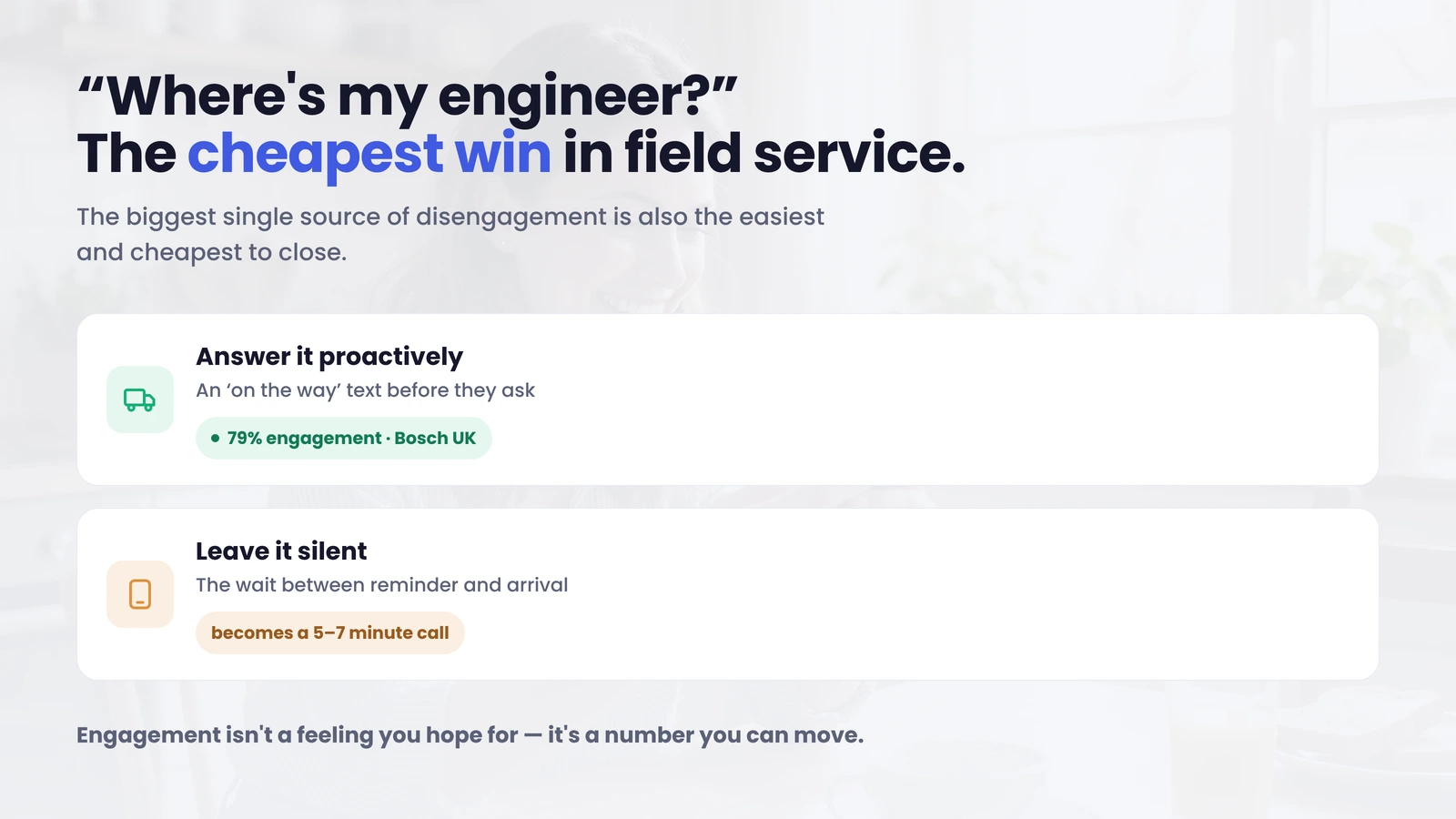
- The fastest engagement win in field service is closing the “where’s my engineer?” gap with proactive notifications and a live ETA.
- You can measure engagement directly: Bosch UK reached 79% engagement with its appointment communications, using self-service and tracking on top of its existing systems.
A field-service organisation can run a flawless schedule and still lose the customer. The routing is optimised, the technician is excellent, the job gets done, and yet the customer spent the morning wondering whether anyone was coming, phoned twice to ask, and came away unimpressed. That disconnect is what customer engagement software exists to fix: the gap between an operation working well internally and a customer who feels informed and in control.
Most software sold under the “customer engagement” label was built for a different job. It runs email campaigns, in-app messages and loyalty programmes for retail, banking and SaaS: the digital, remote relationships those sectors live on. Field service is not that. The defining interaction happens at someone’s door, on a particular day, in a window they were given. Engagement in field service means engagement around the appointment, and this guide covers what that means in practice, with a bias toward what actually moves the numbers in an enterprise service operation.
What is customer engagement software?
Customer engagement software is the technology a business uses to interact with customers across the lifecycle and to make those interactions timely, relevant and easy. At the generic end of the market it overlaps with CRM, marketing automation and customer data platforms, tools focused on acquisition, campaigns and cross-sell. The common thread is communication: reaching the right customer, at the right moment, through the channel they prefer, and letting them respond or self-serve.
In a service context the emphasis shifts. The goal isn’t to market to the customer; it’s to keep them informed and in control around a job that affects their day. So the useful definition for field service is narrower and more practical: customer engagement software is the layer that handles every customer-facing interaction around an appointment: the booking, the confirmation, the reminder, the live tracking, the messaging, the rescheduling and the feedback. It is a customer engagement platform built for the realities of sending a person to someone’s home, rather than for sending a campaign to an inbox.
That distinction matters when you choose a tool. A marketing engagement platform will happily send a “we’re thinking of you” email. It will not tell a customer their engineer is running 40 minutes late and offer a one-tap reschedule, and in field service that second message is the one that decides how the customer feels about you.
Why engagement matters in field service
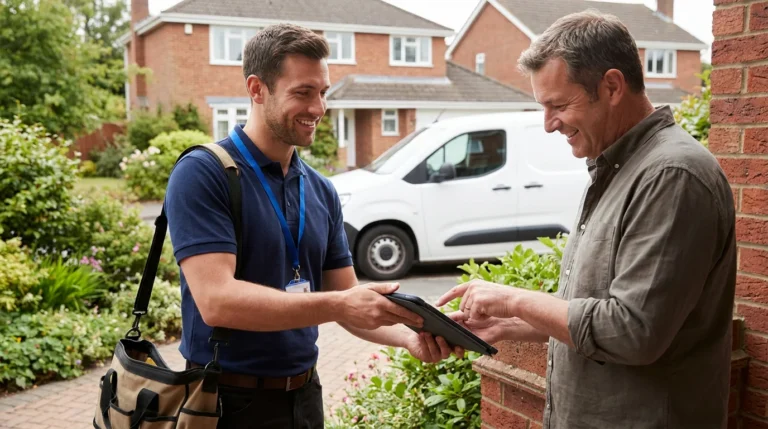
Because in field service the appointment is the relationship. For an energy supplier, a manufacturer or a security firm, the engineer at the door is frequently the only human a customer ever deals with directly. Whatever the customer feels about that visit becomes what they feel about the brand. Engagement isn’t a soft add-on to the operation; it is the operation, seen from the customer’s side.
The commercial case is well documented. Gallup’s research puts a fully engaged customer at an average 23% premium in share of wallet, profitability and revenue growth over the average customer, while an actively disengaged one represents a 13% discount — a swing you feel directly in a subscription or recurring-service model (Gallup). Engagement, in other words, is not a vanity metric. It maps to revenue.
There’s a cost edge too, and it points the same way. A disengaged customer is an expensive one: they call to ask where the engineer is, they miss appointments because nothing reminded them, and they need repeat visits because the loop never closed. Each of those is both an engagement failure and an operational cost. The encouraging implication is that a single intervention, keeping the customer engaged around the appointment, improves the experience and the cost line together. For the wider discipline this sits inside, see our guide to field service customer experience.
Engaging the customer across the appointment journey
Good engagement software covers the whole journey, not just one touchpoint. In field service that journey is strikingly consistent across sectors, and each stage is a chance to keep the customer engaged or to lose them:
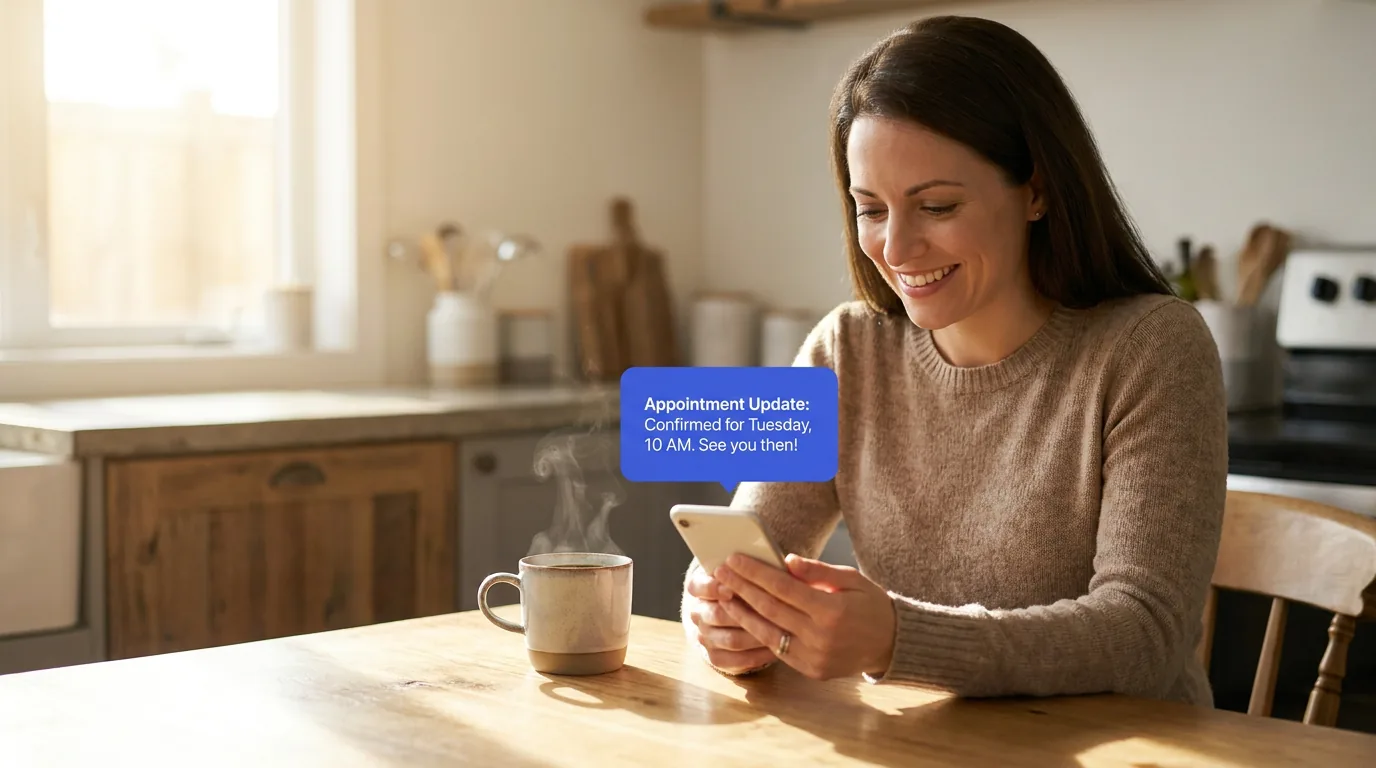
- Proactive notifications. Confirmations and reminders by SMS and email, sent automatically, so the customer always knows what’s booked and when. This alone reduces no-shows and pre-empts the first wave of “is it still happening?” calls.
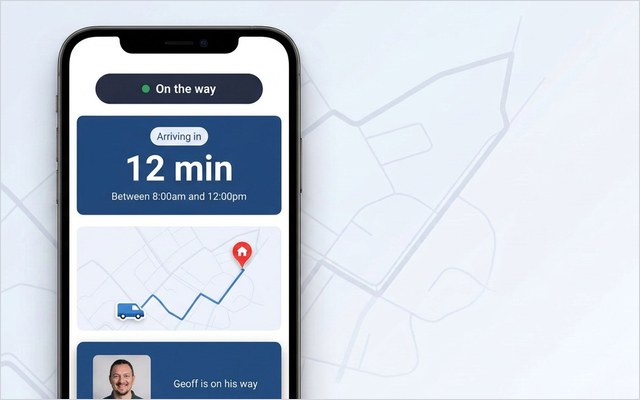
- Live tracking. A real-time ETA on the day (“your engineer is 20 minutes away”) delivered to the customer’s phone. People who track a parcel to their door expect to track the engineer attending their home.
- Self-service. Letting customers book, confirm, reschedule or cancel without phoning anyone. This is engagement and deflection at once: the customer stays in control, and a routine call never reaches the contact centre. We go deeper in our guide to customer self-service.
- Real-time feedback. A quick NPS or CSAT prompt straight after the visit, while the impression is fresh, so issues surface when they’re still recoverable. Capturing it is a product capability, not a survey afterthought: see real-time feedback and NPS.
- In-appointment messaging and offers. Two-way messaging during the job, and the option to surface a relevant, well-timed offer when the customer is already engaged and the technician is on site.
None of these is exotic. What makes them powerful is that they’re proactive and automatic: the customer doesn’t have to chase, because the system reaches out first. That shift, from a customer who has to ask to one who is kept informed, is the whole point of engagement software here. And it answers a clear expectation: Salesforce’s State of Service research found 53% of customers want companies to anticipate their needs, while only 33% feel companies do (Salesforce).
The “where’s my engineer?” gap is the cheapest win
The single biggest source of disengagement in field service is uncertainty about the appointment — and it’s also the easiest and cheapest to fix. Look at what happens around a booked visit in a typical enterprise operation: 30 to 40% of appointments are changed by the customer and 10 to 15% are cancelled, and each change tends to trigger a five-to-seven-minute call, often outside business hours (On My Way deployment research). Add the customers who simply phone to ask when the engineer will arrive, and a large slice of contact-centre volume turns out to be questions the customer could have answered themselves, given visibility.
Engagement software closes that gap directly. A confirmation, a reminder and a live ETA remove the anxiety and the call in one move: the customer is engaged, informed and no longer phoning. It is the highest-return intervention available, which is why it’s the first thing a serious field-service engagement platform should do well.
The link between engagement and retention
Engagement and retention are not separate goals; the first drives the second. A customer who feels in control and well informed around every visit has no reason to look elsewhere. A customer who is left guessing, kept on hold and sent a second engineer for the same fault is a customer already drafting their exit.
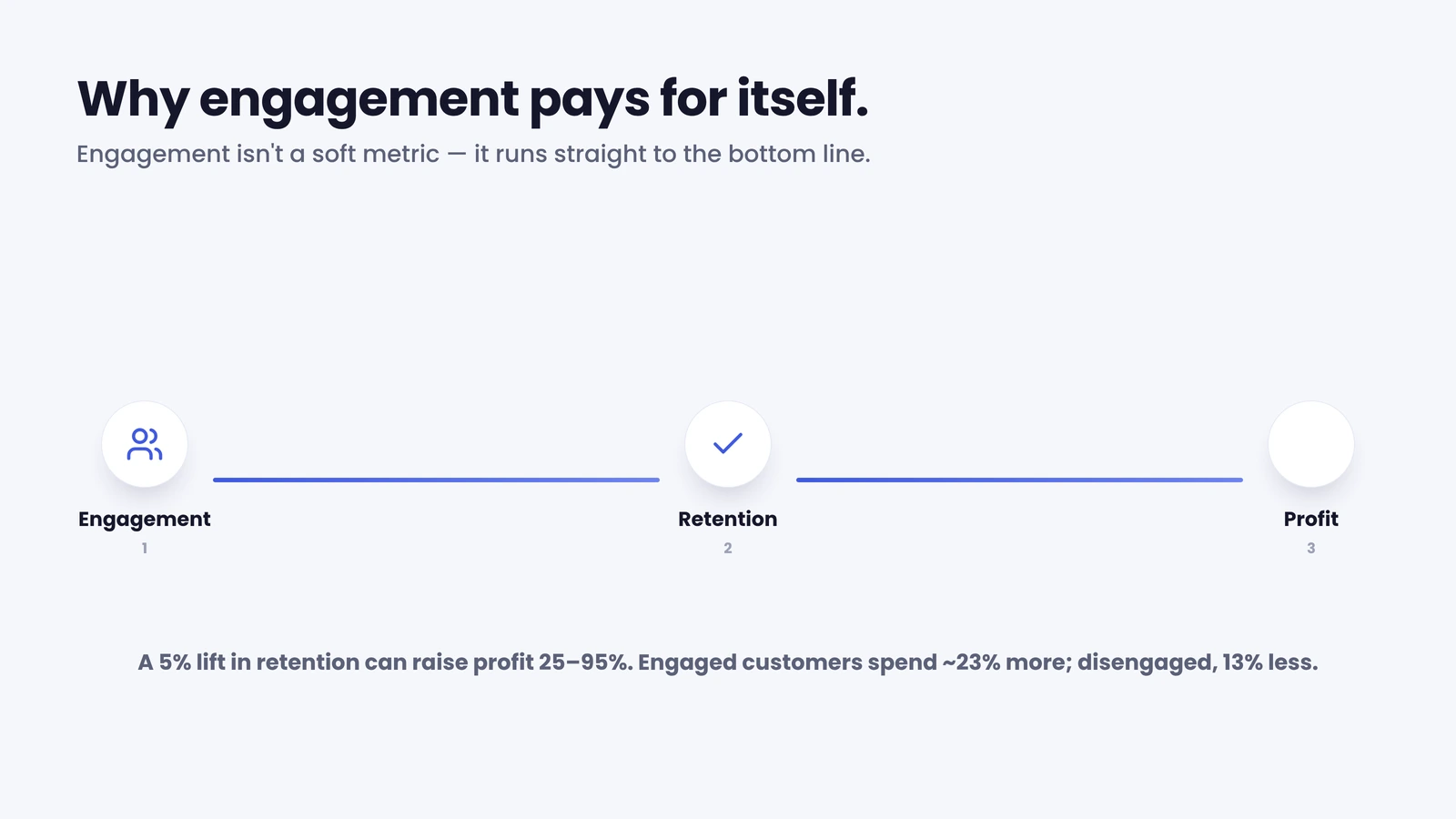
The economics are stark. Frederick Reichheld’s work at Bain found that increasing customer retention by just 5% can lift profits by 25% to 95%, depending on the sector (Reichheld, Harvard Business Review / Bain & Company), and a retained customer is far cheaper to serve than a newly won one. This is why “customer engagement software” and “customer retention software” describe two ends of the same tool: engage the customer well around each appointment and you retain them; retain them and the recurring revenue compounds.
In field service the lever is unusually direct. There’s no loyalty programme to administer, no points scheme to fund. The retention mechanism is simply doing the appointment well and keeping the customer in the loop while you do it. That’s what good engagement software automates at scale.
How to measure customer engagement
You manage what you measure, so an engagement programme tracks two things: how engaged customers are, and what that engagement does to the operation.
On the engagement and experience side: an engagement rate (the share of customers who open or act on appointment communications — a tracking link opened, a self-service reschedule used); NPS and CSAT captured immediately after the visit; and self-service adoption relative to phone contact. For the full treatment of which numbers to track, see our guide to customer satisfaction metrics.
On the operational side, the metrics that move when engagement improves: call-deflection rate, no-show rate and first-time fix rate. Connecting the two sides is the real prize. When a customer uses live tracking and self-service, post-appointment NPS rises and inbound calls fall — same engineer, same job, better outcome, purely because the customer was engaged.
What does good look like? Across enterprise deployments the pattern repeats regardless of sector:
- Bosch UK, with around 350 field engineers, cut ETA-related calls to its contact centre by 53% and reached 79% engagement with its appointment communications via its self-service and tracking layer.
- Brinks Home cut ETA-related calls by 34% and improved appointment-based first-time job completion by 25%.
The 79% figure is the one to hold onto: it shows engagement isn’t a feeling you hope for — it’s a number you can put on a dashboard and move. Typical call reduction lands in the 40 to 55% range in the first months of deployment, which is why On My Way underwrites a 35% reduction in appointment-related calls within 90 days, or it keeps working at no cost until the target is hit.
See the engagement numbers on your own operation. On My Way adds proactive notifications, live tracking, self-service rescheduling and instant feedback on top of your existing workforce-management system — no rip-and-replace. Book a demo (a 30-minute working session, no slide deck) or see how it works.
Choosing a customer engagement platform for field service
The market is full of customer engagement tools, and most are wrong for field service. A good customer engagement strategy here starts by choosing the platform against the right questions:
Is it built around the appointment, or around the campaign? Marketing-led platforms optimise for sending messages. A field-service engagement platform optimises for keeping a customer informed and in control around a scheduled visit. Ask to see the live-ETA and self-service-reschedule flows, not the email editor.
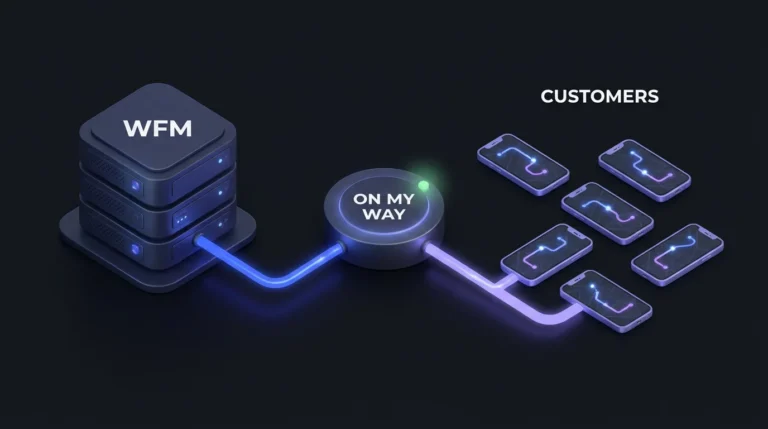
Does it work with the WFM you already run? The common objection to better engagement is that it means replacing the scheduling system. It doesn’t. The strongest model is a customer-facing layer that sits on top of whatever workforce-management platform you have — Oracle, IFS, SAP, ServiceMax or Salesforce — and adds the engagement without touching dispatch underneath.
Does it deflect calls, not just send them? Real engagement reduces inbound contact because the customer can self-serve. A tool that only adds outbound messages without giving the customer a way to act raises noise without cutting cost. (It also shouldn’t need a customer download — a browser-based portal, reached from a link in a text, removes the biggest barrier to engagement.)
Can it prove the result? Look for a platform that reports engagement and call-deflection numbers and is willing to commit to an outcome. A vendor confident enough to guarantee a 35% call reduction in 90 days is telling you the model works.
Get those right and you have a platform that does both jobs at once — the experience job and the cost job — on top of the systems you already run.
Related reading: customer experience software for service teams, how field service teams are cutting inbound calls and a customer experience strategy for field service.
Frequently asked questions
What is customer engagement software? It’s the technology a business uses to communicate with customers and let them act for themselves across the relationship. In field service specifically, it’s the layer that manages every customer-facing interaction around an appointment: booking, confirmations, reminders, live tracking, self-service rescheduling and post-visit feedback.
How is field-service engagement software different from a marketing engagement platform? Marketing engagement platforms are built to send campaigns, emails and offers to drive acquisition and cross-sell. Field-service engagement software is built around a scheduled visit — keeping the customer informed and in control before, during and after the appointment. The defining feature isn’t an email editor; it’s a live ETA and one-tap rescheduling.
Is customer engagement software the same as customer retention software? They’re two ends of the same tool. Engaging customers well around each appointment is what retains them, and retention is where the commercial value shows up. A 5% lift in retention can raise profits by 25% to 95% (Reichheld, Bain), so engagement and retention are best treated as one programme.
How do you measure customer engagement in field service? Track an engagement rate (how many customers open and act on appointment communications), NPS and CSAT after the visit, and self-service adoption — then connect those to operational metrics like call-deflection, no-show and first-time-fix rates. One enterprise deployment reached 79% customer engagement, showing it’s a number you can measure and move, not just a feeling.
Do you need to replace your WFM to add engagement software? No. The strongest approach is a customer-facing engagement layer that sits on top of your existing workforce-management system (Oracle, IFS, SAP, ServiceMax, Salesforce and others), adding notifications, tracking, self-service and feedback without disrupting scheduling or dispatch. It’s far faster and lower-risk than replacing core systems.
What’s the fastest engagement win in field service? Closing the “where’s my engineer?” gap with proactive notifications and a live ETA. It’s inexpensive, quick to deploy, and reduces both customer anxiety and inbound call volume — enterprise deployments typically see appointment-related calls fall by 40 to 55%.
References
- Gallup — The Value of Customer Engagement (fully engaged customer = 23% premium; actively disengaged = 13% discount)
- Reichheld, F. (Bain & Company) — Prescription for Cutting Costs / “Zero Defections” (a 5% increase in retention can raise profits by 25%–95%)
- Salesforce — State of Service (53% of customers want companies to anticipate needs; 33% feel they do)
- MarketsandMarkets — Field Service Management Market worth $9.17 billion by 2030 (USD 5.1B 2025 → 9.17B 2030, 12.5% CAGR)
- On My Way / Leadent Digital — enterprise deployment data (appointment-change volume; client engagement and call-reduction outcomes).

Keep your WFM. Upgrade what your customers experience.
On My Way is the customer-experience layer for field service: live arrival tracking, self-service rebooking, notes and photos, and feedback, added on top of the scheduling system you already run. No rip-and-replace, live in four to six weeks.