Planned Preventive Maintenance: A Complete Guide

Plant doesn’t fail on a schedule that suits you. A chiller gives out in the hottest week of the year; a lift fails the morning of an audit. Planned preventive maintenance is the discipline of reaching that equipment before it fails — servicing assets on a fixed schedule so failures are prevented rather than chased. This guide covers what it is, how it differs from reactive maintenance, what good PPM software does, and the one part most programmes leave out: telling the people on site that an engineer is coming.
Quick answer: Planned preventive maintenance (PPM) is the scheduled inspection, servicing and replacement of equipment at set intervals, by time or by usage, to stop failures before they happen. It trades a small, predictable amount of planned downtime for far more unplanned downtime, extends asset life, and turns maintenance from a run of emergencies into a managed programme.
Key takeaways
- PPM is maintenance done to a schedule, not in response to a breakdown: the goal is to prevent failure, not react to it.
- The trade is deliberate: a little planned downtime now in exchange for far less unplanned downtime, fewer emergency call-outs and longer asset life.
- PPM software builds the schedule, raises work orders, tracks asset history and evidences compliance: it is the system of record for the programme.
- A planned visit is still an appointment: the occupant needs notice and a way to rebook, and that customer-facing layer is the piece most maintenance systems miss.
Ask any Head of Maintenance where the budget really goes and the honest answer is rarely the planned work. It’s the 2am call-out, the emergency parts at full price, the same-day contractor premium, the tenant complaint that follows. Reactive maintenance is expensive precisely because it happens on the asset’s terms, not yours. Planned preventive maintenance is the structured alternative: scheduled tasks designed to keep equipment running and catch wear before it becomes failure. The wider field service management software sector that schedules and tracks this work is forecast to grow from $5.10 billion in 2025 to $9.17 billion by 2030, a 12.5% CAGR (MarketsandMarkets, 2025), and most of that spend goes on the scheduling engine. What follows is how PPM actually works, and where the biggest unclaimed improvement still sits.
What is planned preventive maintenance?
Planned preventive maintenance is maintenance carried out on a predetermined schedule, at fixed time intervals or after a set amount of usage, to keep an asset in working condition and prevent failure. It is proactive by definition: the work is planned in advance and done whether or not anything appears to be wrong.
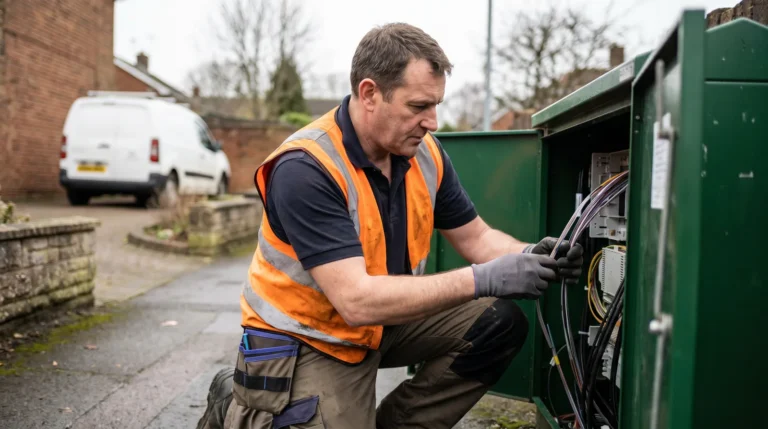
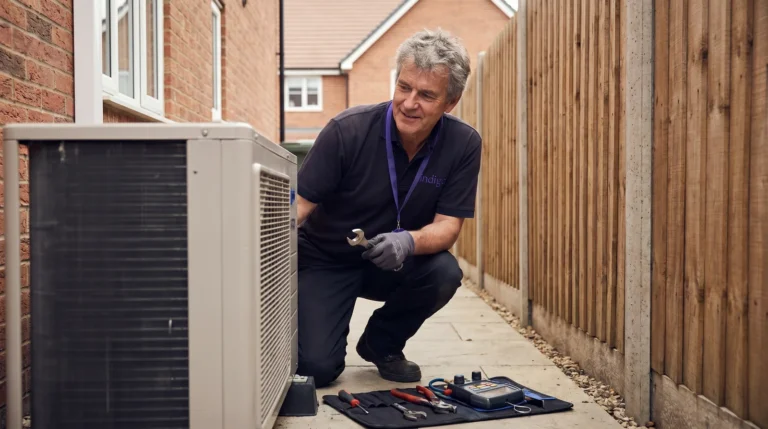
A single PPM task is usually one of three things: an inspection (check, measure, record), a service (clean, lubricate, calibrate, replace consumables), or a planned replacement of a component near the end of its life. A boiler serviced every twelve months, a fire damper tested annually, an air-handling unit’s filters swapped quarterly, a lift inspected on a statutory cycle — each is a PPM task on a recurring schedule.
The two words in the middle do different work, and it is worth separating them. Planned maintenance is any work scheduled in advance, including corrective work booked in after a fault has been spotted. Preventive maintenance is work done specifically to stop a failure before it occurs. PPM is the overlap of the two: prevention-focused work, carried out on a plan rather than in response to a breakdown. That is the sense in which most facilities teams use the term.
“Planned preventive maintenance” and “planned preventative maintenance” are the same thing: both spellings are used across UK facilities teams, and PPM is the common abbreviation. The defining feature is the intent: intervening early, on a plan, to stop a failure you can reasonably predict.
PPM vs reactive maintenance
The difference between planned preventive and reactive maintenance is who sets the timing. With PPM, you do. With reactive maintenance, the equipment does — you act only once it has already broken.
Reactive maintenance, or run-to-failure, has its place: for cheap, non-critical, quick-to-replace items, waiting for failure can be rational, since servicing a £15 part on a schedule may cost more than replacing it when it dies. The genuine run-to-failure candidates are narrow — redundant components with a standby already in place, light fittings and lamps, tap washers, door closers, items whose failure is cheap, instant to spot and harmless while you wait. Anything whose failure stops a process, breaches compliance or risks safety belongs on a plan, however dull the servicing. The problem is that most teams run reactive by default rather than by design, and that is where it gets expensive. A like-for-like comparison makes the gap clear:
- Timing. PPM is scheduled and predictable; reactive is unscheduled and arrives at the worst moment.
- Cost profile. PPM spreads cost into planned, budgetable work; reactive concentrates it into emergency call-outs, premium parts and overtime.
- Downtime. PPM trades short, planned downtime for far less of the unplanned kind; reactive means the asset is already down before you start.
- Asset life. PPM extends it by catching wear early; reactive shortens it, because failures cascade and a neglected asset degrades faster.
- Customer impact. A PPM visit can be booked, noticed and worked around; a reactive failure disrupts the occupant with no warning.
Most mature operations aim for a deliberate split — mostly planned work, a small residual of genuine reactive jobs. That shift from mostly-reactive to mostly-planned is the single biggest lever a maintenance team has.

The benefits of PPM
The headline benefit of planned preventive maintenance is fewer failures, and everything else follows. Catch wear before it becomes a breakdown and the expensive consequences of failure simply don’t occur:
- Less unplanned downtime. Equipment serviced on a plan fails less often and less catastrophically, which is the difference between a managed estate and a stream of incidents.
- Lower lifetime cost. Planned work at standard rates beats emergency work at premium rates, and maintained assets last longer before they need replacing.
- Better first-time fix. A planned visit can be prepared — the right engineer, the right parts, the asset history to hand. The average first-time fix rate sits at 76%, with top performers reaching 87% and the bottom quartile at 55% (Aquant Field Service Benchmark, 2024). Properly resourced planned work lives at the top of that range
- Compliance and safety. Statutory inspections (fire, gas, lifting equipment, pressure systems) are PPM by another name. A programme that schedules and evidences them keeps you on the right side of an audit.
- Predictable budgeting. A planned schedule is a forecastable cost; reactive maintenance is a line item you can only ever estimate.
None of this is free — PPM costs labour up front. The point is that the up-front cost is smaller and far more controllable than the failure cost it displaces.
What PPM software does
PPM software turns a maintenance plan into scheduled, tracked, evidenced work. At its core it does four things: builds and maintains the schedule, raises work orders automatically when tasks fall due, holds the asset register and history, and reports on completion and compliance. A capable preventive maintenance software platform (a standalone PPM tool, a CMMS or a CAFM system) will typically cover:
- Asset register. Every piece of equipment, its location, its service requirements and its history in one place.
- Schedule engine. Time-based and usage-based triggers that generate the preventive maintenance schedule and fire off tasks when due, without anyone having to remember.
- Work order management. Automatic creation, assignment and tracking of jobs to completion, so nothing planned quietly slips, the same work order management discipline that underpins all field service.
- Mobile access for engineers. The job, asset history and checklist in the technician’s hand on site, with the means to record readings, photos and sign-off.
- Compliance reporting. An audit trail of what was inspected, when, by whom and with what result.
- Analytics. Planned-versus-reactive ratios, schedule compliance, mean time between failures and cost per asset.
Most of this is mature territory; the major platforms do it well. The interesting question is not whether PPM software can schedule the engineer — it’s whether anyone has told the occupant the engineer is coming. That is where most systems stop short.
Communicating planned visits to customers and occupants
A planned maintenance visit is still an appointment, and the person on site (a tenant, a facilities manager, a homeowner under a service contract) needs to know about it and be able to change it. This is the part of PPM the maintenance schedule never handles, and where planned programmes quietly fail. The schedule fires, a work order is raised, an engineer is dispatched — and the first the occupant hears of it is a knock at the door, or worse, a missed visit because no one was there to grant access. Where access depends on someone being present, a perfectly planned visit becomes a failed one, and a failed visit becomes a reschedule, a repeat journey and a phone call.

That phone call is the heart of the appointment problem. Across field operations, 30–40% of appointments are changed by the customer and 10–15% are cancelled, each change tending to generate a five-to-seven-minute call, usually after hours (On My Way internal research). Planned maintenance is more exposed than most, because the occupant had no part in setting the date and is far more likely to need to move it.
The fix is a customer-facing communication layer that reads the planned schedule and surfaces it to the people affected: an automated SMS and email confirmation when the visit is booked, a reminder before the day, real-time tracking of the engineer’s ETA, and the ability to rebook through a browser portal with no app to install, plus a quick feedback request at close. The scheduler still owns the schedule; the layer simply makes the visit visible and changeable to the occupant. That is the difference between a visit that happens and one that has to be repeated.
53% — Bosch UK cut ETA-related calls to the contact centre by 53%, with 79% engagement with appointment comms, once planned visits were confirmed, tracked and reschedulable by the occupant rather than managed entirely over the phone.
Crucially, this is additive. You don’t replace your PPM software, your CMMS or your CAFM system to do it — you add the layer on top, reading the same scheduled events your maintenance system already produces. On My Way is built to sit on any underlying scheduler and handle exactly this customer-facing layer; the automated appointment notifications are the most direct example in action.
Measuring a PPM programme
You measure a planned preventive maintenance programme by how much of your maintenance is planned versus reactive, not by raw job counts. A team closing thousands of work orders a month is not necessarily healthy; a team where most of those jobs were planned rather than emergencies is. The metrics worth tracking:
- Planned vs reactive ratio. The share of work that is scheduled rather than breakdown-driven. Moving this towards planned is the whole point.
- Schedule compliance. What share of due PPM tasks were completed on time. Slippage here is where prevention turns back into reaction.
- First-time fix rate. Whether visits resolve in one trip: the average is 76%, the best 87% (Aquant, 2024). Planned work should sit near the top
- Mean time between failures. Rising MTBF on an asset class is direct evidence the PPM is working.
- Failed-visit and reschedule rate. How often a planned visit doesn’t complete: frequently an access or communication failure rather than an engineering one, which is exactly what the occupant-facing layer addresses.
Set a baseline before you change anything, then watch the planned-versus-reactive ratio climb and the failed-visit rate fall. Those two curves moving together are what a maturing programme looks like.
Getting started
Starting a PPM programme rewards sequence over ambition. Begin with the asset register — you cannot schedule what you haven’t catalogued. List every asset, its criticality, its service requirements and its statutory obligations, and prioritise the equipment whose failure hurts most. From there, build the schedule for your critical assets first, put it into preventive maintenance software so tasks fire automatically rather than relying on memory, and get engineers working from mobile work orders so completion and evidence are captured on site.
Then close the loop most programmes leave open: connect the occupant to the schedule you’ve just built. The same scheduled events that trigger an engineer can trigger a confirmation, a reminder, a live ETA and a self-service reschedule for the person on site, the cheapest improvement you can make to both completion rates and the experience of being maintained around, sitting on top of whatever scheduler you choose. To see how the customer-facing layer fits your operation, book a demo and map it to your own visit volume, or read how On My Way works first.
Frequently asked questions
What is planned preventive maintenance?
Planned preventive maintenance (PPM) is the scheduled inspection, servicing and replacement of equipment at set intervals — by time or by usage — to prevent failures before they happen. It is proactive rather than reactive: the work is planned in advance and carried out whether or not the asset shows signs of trouble, trading a small amount of planned downtime for far less of the unplanned kind.
What is the difference between planned and preventive maintenance?
There is a subtle distinction. “Planned” maintenance means any work scheduled in advance — which could be corrective work after a fault is spotted. “Preventive” maintenance means work done specifically to stop failure before it occurs. Planned preventive maintenance is the combination: prevention-focused work, done on a plan. Most teams use PPM to mean exactly that.
What is a PPM schedule?
A PPM schedule is the calendar of recurring maintenance tasks for your assets — what needs doing, to which equipment, how often, and by when. It is driven by time (quarterly, annually) or by usage (running hours or cycles). PPM software generates the schedule and raises work orders automatically as each task falls due, so nothing planned is forgotten.
Does PPM software tell customers about a planned visit?
Usually not on its own. PPM and CMMS platforms are built to schedule and track the engineer, not to communicate with the occupant — but a planned visit is still an appointment, so the person on site needs notice and a way to rebook. A customer-communication layer such as On My Way reads the scheduled events your maintenance system already produces and turns them into automated confirmations, reminders, live ETA tracking and self-service rescheduling, on top of your existing scheduler with no app to install.

The bottom line
Planned preventive maintenance turns maintenance from a run of emergencies into a managed programme — trading a little planned downtime for far less of the unplanned kind, and extending the life of the assets you depend on. The operational core is well served by mature PPM, CMMS and CAFM tools; the gap most programmes still leave open is the occupant, because a planned visit is only as good as the access you get on the day. Close that loop with a customer-facing communication layer on top of your scheduler, and planned work actually completes as planned.
References
- MarketsandMarkets — Field Service Management Market (2024): USD 5.10B (2025) to USD 9.17B (2030), 12.5% CAGR
- Aquant — Field Service Benchmark Report (2024): average first-time fix rate 76%; top performers 87%; bottom quartile 55%
- On My Way / Leadent Digital — internal research on appointment-change and call-volume data.